The internet and the latest digital technologies have significantly reshaped commerce, leading to innovative business models like Direct-to-Consumer (D2C). As we navigate the complexities of the digital e-commerce era, understanding the D2C sales model is essential for businesses and consumers.
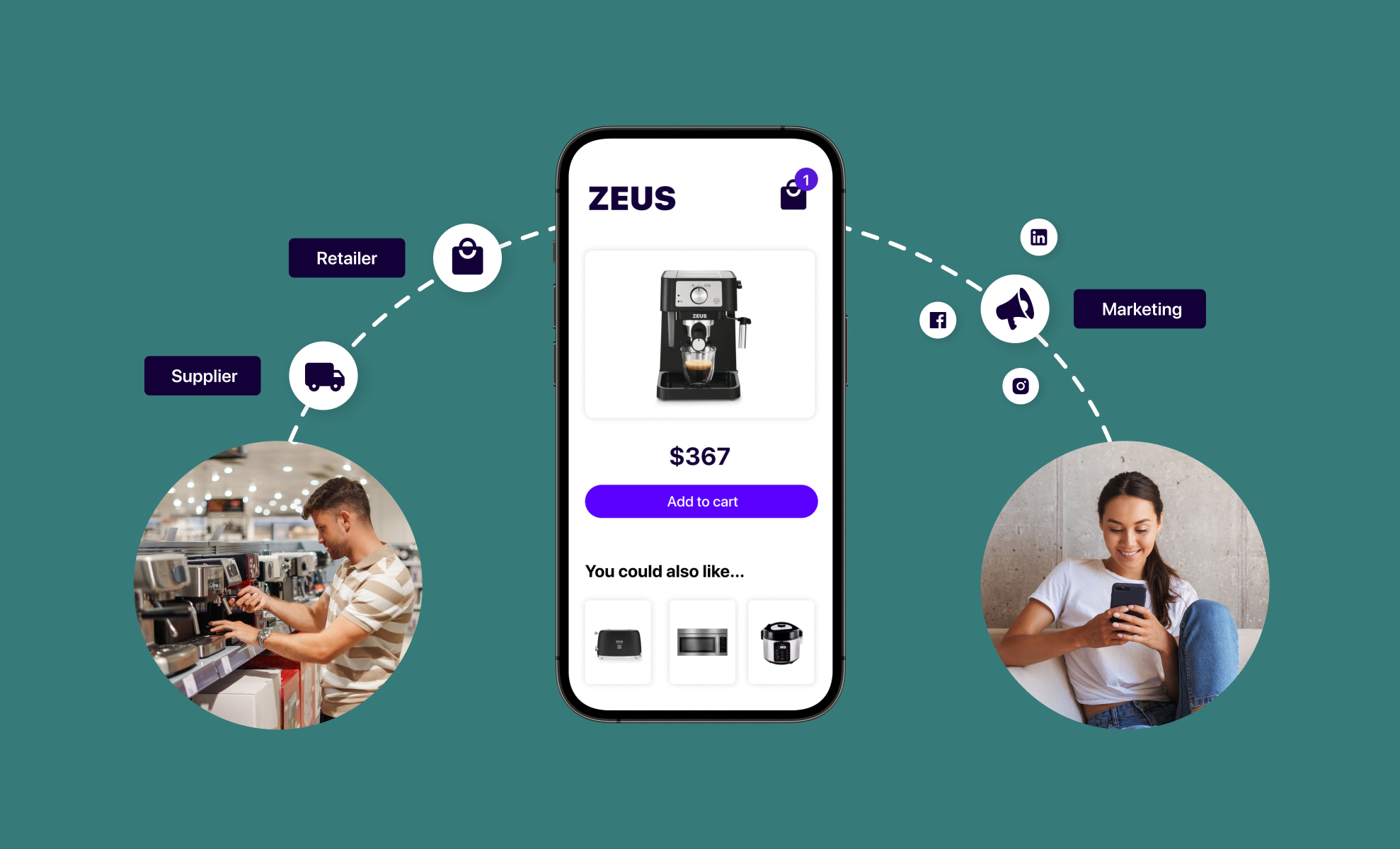
D2C is a business model where manufacturers or brands sell directly to consumers. The model bypasses intermediaries such as wholesalers, retailers, or third-party marketplaces. Its popularity has surged in recent years, revolutionizing traditional retail dynamics.
The D2C sales sector has grown exponentially, with companies like Warby Parker, Dollar Shave Club, and Casper leading the charge. The US D2C e-commerce market alone exceeded $128 billion in sales in 2021. These numbers are projected to reach nearly $213 billion by 2023.
These are powerful statistics for anyone selling anything. The surge in D2C sales has been fueled by significant shifts in consumer behavior, with an increasing number of shoppers preferring online stores with a direct connection to sellers.
The D2C way of doing business grants businesses greater control over their brand, customer relationships, and, most importantly, their sales and profit margins. On the customer’s end, it offers consumers a more personalized and engaging shopping experience, often leading to better pricing and customer service.
The D2C sales model has vast potential across various product categories, geographies, and demographic segments. What better way to do that than studying emerging market trends and decode statistics relevant to the D2C market?
That’s just what this post summarizes by shedding light on key D2C statistics to help you understand:
The D2C evolution over the years
What are the most prominent trends shaping D2C sales today?
What the future of the thriving D2C market might look like.
Let’s dive right in by first understanding what D2C is and what it can do for your brand.

A deeper dive into the D2C retail model
Direct-to-Consumer (D2C), or business-to-consumer (B2C), is a contemporary business model where companies sell their products directly to customers. The idea is to bypass traditional intermediaries such as retailers or wholesalers. With the advent of the internet and digital commerce, D2C transactions primarily occur online. Although some D2C brands maintain physical retail spaces as an added touchpoint for customers.
Retrospective on the D2C business revolution
The roots of the D2C model can be traced back to the era when personal computer manufacturers like IBM and Apple initiated a shift toward direct sales to reach consumers more efficiently. The model's popularity surged during the dot-com bubble of the late 1990s when it predominantly referred to online retailers.
The advancements in internet accessibility and transportation infrastructure impacted the retail landscape. Some of its effects included broadening consumer choices and heightening competition globally, paving the way for the explosive growth of D2C.
D2C startups such as Warby Parker, Casper, and Everlane Clothing soon followed suit. These brands have popularized the model, significantly impacting the retail industry. D2C continues to adapt to changing consumer expectations, shrinking margins in multichannel retail, and technological advancements that streamline online operations.
Here are some of the benefits that continue to make the D2C model attractive for businesses long after the dot com burst:
Control over the supply chain: D2C businesses manage their own supply chains. That gives them a stronger grip on product quality, availability, and delivery times.
Direct customer interactions: D2C businesses can engage with their customers directly by eliminating middlemen. Direct engagement fosters stronger connections, enabling businesses to understand customer needs better, build brand loyalty, and tailor products and services accordingly.
Improved profitability: Subscription-based pricing is a common D2C strategy. It provides consistent revenue and improved profitability, supporting sustained business growth.
Despite the benefits, adopting the D2C model is not without challenges. The model presents risks related to data privacy, cybersecurity threats, and increased demands on the supply chain. With appropriate strategies and technology in place, these risks can be mitigated.
The D2C model continues evolving in an ever-changing digital landscape and still offers exciting business opportunities. It enables brands to build direct and meaningful relationships with their customers and understand their needs and preferences.
It also gives autonomy to brands over their brand narratives. Direct customer connections and the ability to quickly adapt to market changes position D2C businesses for long-term success in the industry.

Key figures and statistics for D2C sales
The Direct-to-Consumer (D2C) market continues to surge in popularity and profitability. That’s partially because digital platforms and e-commerce continue to drive consumer trends and behaviors.
The global D2C market size has experienced substantial growth over the years, with the U.S. leading in D2C e-commerce sales. Here are some of the most striking D2C market statistics:
1. Year-over-year growth in D2C sales
Since its inception, the D2C market has been experiencing rapid growth. In the United States alone, D2C e-commerce sales topped $128 billion in 2021 and are projected to surge to nearly $213 billion by 2023.
The U.S. is the largest D2C marketplace, with digitally native brands and well-established companies contributing to the growth.
2. Current global market and regional breakdown of the D2C market
While the U.S. commands a significant share of the D2C market, other regions are not far behind. In the Central and Eastern European (CEE) region, D2C sales are growing robustly, although specific numbers are not readily available.
The same pattern is observed in Germany and India, where D2C online sales are rising steadily. Similarly, the D2C market is making significant strides in Hong Kong, with online retail value witnessing substantial growth.
3. Most popular product categories in D2C sales
The market categories for D2C sales are broad and varied, encompassing everything from apparel to household items. However, certain categories stand out. Here’s a list of the most popular D2C industries:
Garments
Footgear
Gadgets & Electronics
Toys
Veterinary Supplies
Office Supplies
Tools (Manual & Electric)
Food
Home Furnishings
Athletic & Sporting Goods
A major component of D2C sales success hinges on the above categories. These categories align with the D2C model's strengths: competitive pricing, personalized experiences, and clear brand identity.
Established brands like Nike drive sales in the sports apparel and footwear category. D2C companies like Warby Parker, Dollar Shave Club, and Casper are leading the way in eyewear, grooming, and bedding.
4. Consumer demographic and behavior statistics for D2C
Consumer behavior plays a critical role in the D2C market. Many consumers demonstrate loyalty to top D2C brands, evident in the high repurchase rates. Delivery times also factor into consumers' purchasing decisions, as does the appeal of supporting local manufacturers.
Consumers are increasingly turning to D2C channels for their shopping needs. The D2C trend is underlined by a marked rise in online searches leading to D2C purchases.
5. Increased use of social media for D2C sales
The use of social media platforms for D2C sales has grown exponentially, and it's not difficult to see why. Facebook, Instagram, TikTok, and others offer a rich pool of prospective customers with whom businesses can directly engage.
With billions of users worldwide, these platforms offer D2C brands a cost-effective and efficient means to market their products and services.
Channels to connect directly with consumers.
Opportunities to foster customer loyalty through personalized experiences.
Platforms for targeted advertising.
From sponsored posts to shoppable tags and full-fledged e-commerce stores on these platforms, social media has given D2C brands the ability to market their products more visually and interactively.
The interactive nature of these platforms also allows brands to communicate directly with consumers, fostering stronger relationships and encouraging brand loyalty.
6. The role of technology and data analytics in improving D2C strategies
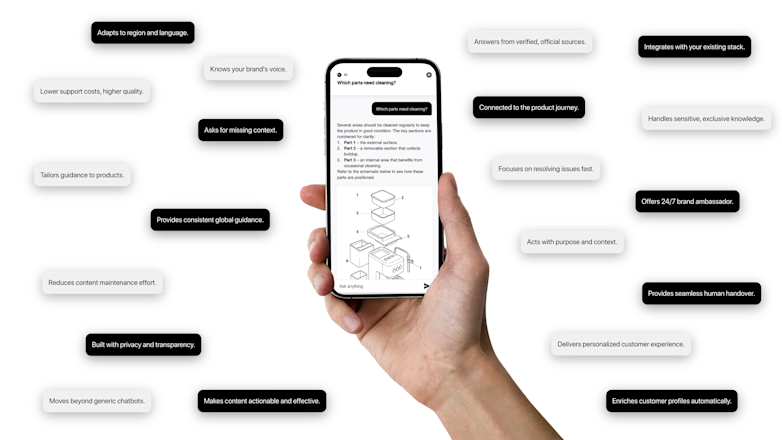
Technology is central to successful D2C strategies. AI-based web chatbots, for instance, are being employed more frequently as first-level customer service representatives. They are designed to help customers with everything from inquiries and complaints to finding the right product.
AI-based web chatbots and virtual agents for improved customer service.
Use of analytics and machine learning for insights into customer behavior.
Enhanced digital presence to increase accessibility and convenience.
Data analytics and machine learning are also pivotal to gaining deeper insights into customer behavior and preferences. A data-driven approach helps D2C brands optimize their marketing strategies, personalize their offerings, and anticipate consumer trends. That has a compounding effect on effective customer retention and acquisition strategies.
7. Personalization and customizability in D2C models
By leveraging consumer data, D2C brands can offer highly personalized experiences, products, and services that reflect individual customer preferences and needs.
From product recommendations based on previous purchases to curated content, personalization is a key strategy for D2C brands to differentiate themselves in a competitive market. Here are three ways the D2C model helps brands harness the power of customization:
Provides data insights: Advanced data metrics are key for tailoring customer experiences.
More control: Customization and control set D2C brands apart from traditional models.
Enhanced customer relationships: In-depth customer understanding to deliver values that resonate with modern shoppers.
The ability to customize products to match individual preferences is another growing trend in the D2C space. That can range from allowing customers to select the ingredients in their skincare products to designing their own sneakers, enhancing the appeal and value of these products to the individual customer.
8. The rise of subscription models in D2C sales
The convenience subscription models offer has made them increasingly popular among businesses and consumers. For consumers, subscriptions mean receiving their favorite products or services regularly without placing repeated orders.
Subscriptions offer a stable revenue stream and increased customer retention rates for businesses. Here are three reasons why brands and customers love the subscription-based D2C model:
Consumer preferences for ease and convenience.
The appeal of regularly receiving products or services without constant reordering.
Business benefits such as stable revenue and improved customer retention.
The subscription model has found particular success in beauty and personal care, food and beverage, and digital media services.
9. Shift towards sustainable and ethical products in D2C sales
Consumer consciousness is shaping the D2C landscape, with increasing demand for products that align with their values and concerns. The shift towards sustainable and ethical products is driven largely by younger generations who are more aware of their consumption habits' environmental and social impact. Here’s what today’s consumer expects from the brands they shop from:
Products that are sustainable and ethically produced.
Brands that align with social causes and demonstrate corporate social responsibility.
Increased transparency in production and supply chain processes.
The trend has seen the emergence of brands that offer products made from sustainable materials, use eco-friendly production processes, and adopt fair trade practices. For example, Rothy's, a D2C shoe company, makes stylish footwear from recycled water bottles, while Blk & Bold pledges 5% of its profits to initiatives supporting at-risk youth.
These trends suggest a growing emphasis on personalization, technology, and ethical considerations in the D2C space. By staying ahead of these trends, D2C brands can enhance their offerings, build stronger customer relationships, and ultimately achieve long-term success in a competitive market.
Charting the course of future D2C sales
The future of Direct-to-Consumer (D2C) sales is influenced by several key trends that were expedited due to the COVID-19 pandemic. With retail e-commerce projected to reach $7.4 trillion by 2025, D2C sales will claim a big chunk.
The traditional D2C model faces challenges and needs to evolve to maintain competitiveness. That includes adopting an omnichannel strategy, strengthening connections with their communities, and vertically integrating to improve profit margins. Here’s what the future of D2C sales is shaping up to be:
1. Projected growth for the D2C market
The Direct-to-Consumer (D2C) market is poised for significant growth, influenced greatly by the shifts in consumer behavior during the COVID-19 pandemic. The US market alone is projected to expand at a CAGR of around 23% from 2019 to 2023. The continued growth of e-commerce globally promises a bright future for D2C sales.
By 2025, e-commerce is estimated to grow by 11%. Even Fortune 500 companies, like Nike, are setting ambitious D2C targets, aiming for 50% D2C sales in the next five years.
2. Emerging trends and potential disruptions in D2C sales
In the business industry, the only constant is change. Here are several trends set to shape the D2C landscape:
Increased personalization and customization, enhancing customer experiences and product offerings.
Continued leveraging social media, digital communities, and influencers to drive sales.
Expansion into new industries, like life sciences and healthcare, where telehealth services are becoming part of the D2C model.
Strategic alliances and acquisitions to access specialized D2C capabilities.
One thing’s clear: Businesses looking to thrive in this expanding market need to harness the power of D2C effectively.

Unfold the next chapter of your D2C sales with Layerise:
Direct-to-Customer (D2C) sales channels provide critical opportunities for brands and businesses looking to stay relevant in e-commerce. You need to develop an effective D2C action plan to forge direct customer relationships, control experiences, and gain access to valuable customer data.
The transition to a D2C model offers benefits like higher margins, pricing power, and a faster time-to-market. But it can just as easily be an overwhelming change that can spell disaster if mishandled.
To effortlessly navigate these changes in your way of conducting business, you need a platform that streamlines operations and increases efficiency. That’s where Layerise comes in. At Layerise, we understand the ever-evolving D2C market and have built features to help your brand stay ahead:
Customer insights: Our platform gathers essential customer data, helping you better understand their needs and preferences, enabling you to deliver personalized experiences and products.
Direct engagement: Layerise helps you establish a direct line of communication with your customers, fostering stronger relationships and enhancing customer loyalty.
Product information management: Layerise’s robust PIM feature ensures customers have instant access to product guides, tutorial videos, and other useful content, improving their post-purchase experience.
That’s not all we do. Book a demo today to see how our platform elevates your customer experience and data collection practices. By integrating Layerise into your strategy, you're not just preparing for the future of D2C sales; you're helping shape it. Find out more on our website.
Learn how to collect valuable insights on your customers to sell even more.

How to Turn a New Obligation into a Growth with Layerise

A trusted, brand-safe AI assistant that knows your products, your customers and your content.