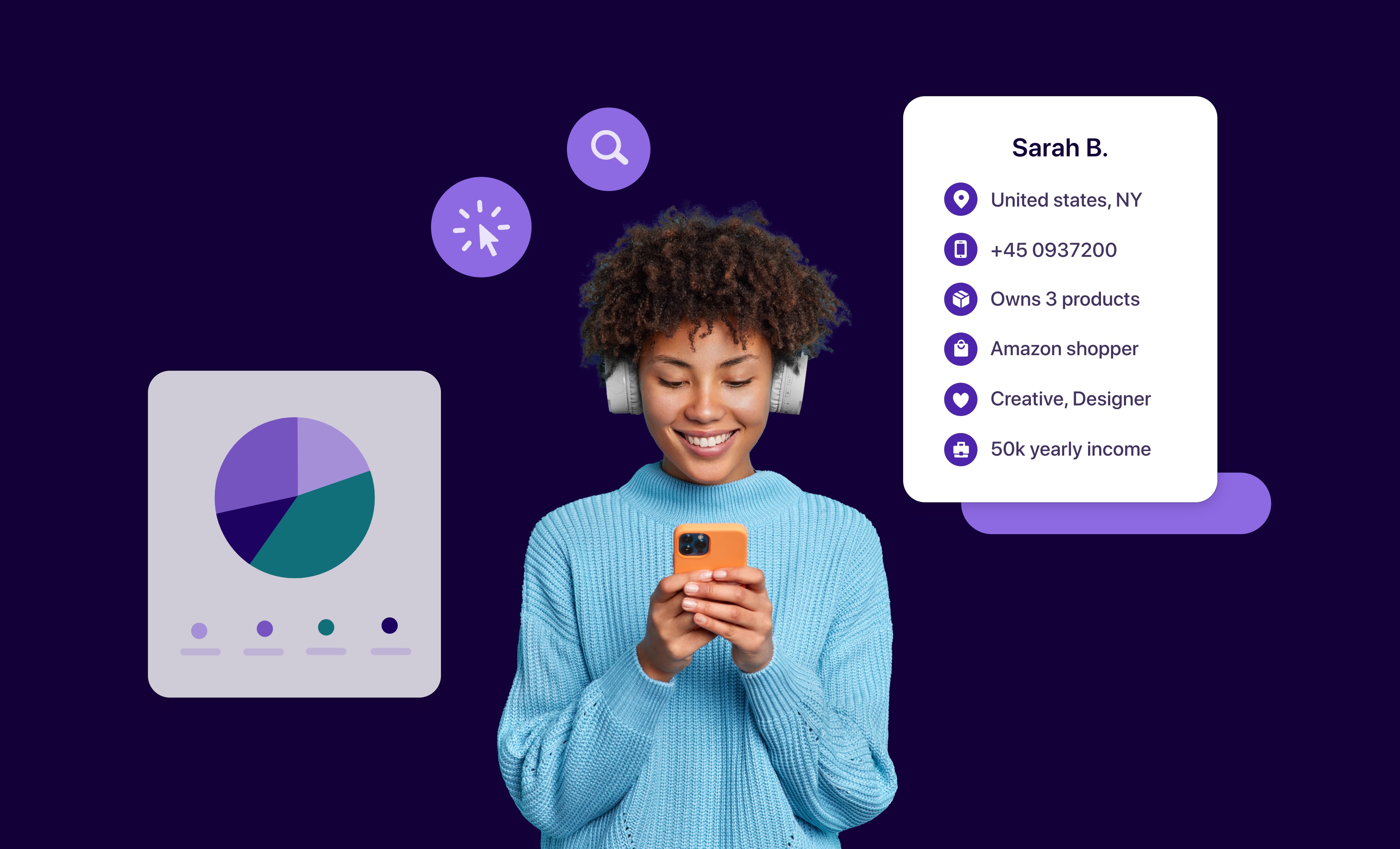
Over the past decade, every brand of every size and industry has repeatedly been told they must devote their efforts to gathering as much customer data as possible. Data is, after all, how you can personalize your offering, improve the customer experience, and, most significantly, guide your company to success.
To design superior customer experience and guarantee customer retention, a successful brand must pay attention to consumer feedback and act on it. However, collecting customer feedback has become increasingly challenging due to concerns about data privacy. In fact, getting customers who are hesitant to provide feedback to do so is a constant struggle.
Although customer feedback is the best way to streamline your business with data, brands usually struggle to capitalize on the data they collect. It could be that the information gathered isn't actionable, or that the root of the problem is a lack of direction.
Are you utilizing your client feedback to its fullest potential? How can you be sure that your input will result in sound, practical insights that benefit your company? We'll help you answer these questions in our guide. Let's discuss some of the common mistakes while collecting customer data.
Collecting data about your customer is essential
Before we explore tips to analyze customer data, let's understand why collecting data about your customer is essential in 2022.
Did you know that 2.5 quintillion bytes of data are collected daily? However, most brands and merchants still pass up the chance to gather and effectively use customer data. Although you may not be able to collect such a humungous quantity of customer data, you can still ensure that the data you collect has the best possible use.
Here are some of the benefits of collecting customer data.
1. Identifies high-value customers
A high-value audience is a segment of your target demographic that is likely to continue purchasing your goods or services for an extended period of time. People who share specific characteristics, such as demographics, product interests, and channel preferences, constitute a high-value audience, resulting in higher-value sales.
Customer data allows you to find high-value clients, which improves the effectiveness of your targeting. You can adopt more effective and efficient acquisition methods by using your customer data to target similar high-value similar audiences.
2. Improves personalization
Regarding marketing and product recommendations, order confirmations, and any other type of contact between customers and your company, about 63% of buyers say they expect personalization from the brands they choose.
Collecting data effectively can fulfill customer expectations for individualized communications and recommendations.
Furthermore, pitching them the goods and services they are most likely to buy will increase your chances of closing the deal. However, this is only possible if you have a better understanding of the types of goods and services they are interested in.
3. Prevents customer churn
Customer attrition or customer churn refers to the percentage of customers that have stopped using your brand for a predetermined time.
Customers frequently go through a "cool down" period before leaving, during which they exhibit signs that they're going to leave. You can take action to re-engage clients before they are completely gone if you can recognize and follow these cues.
Customer data makes this possible. You may predict and ultimately stop customer turnover by gathering customer data and utilizing predictive analytics via solutions like Customer Data Platforms (CDPs). This raises overall earnings and helps you increase retention rates.
4. Offers a seamless customer experience
Customers have more influence and a louder voice than sellers in today's intensely competitive retail environment. To keep a healthy relationship with end-users, brands must carefully evaluate their needs. A positive customer experience increases brand loyalty and ultimately increases revenues.
Consumers today expect personalized interactions across all channels and touchpoints. Collecting customer data allows you to create a great customer experience that is consistent across all engagement channels and differentiates your company from competitors.
5. Turns one-time customers into loyal ones
Every company aims to boost revenue by getting more orders from every single customer. However, doing so is not easy, especially if you have little or no customer information. In reality, 50% to 80% of customers who make a single purchase from a company never make another.
Thanks to customer data, you can now create strategies to convert one-time customers into devoted, recurring customers. Analyzing your data will help you determine which items first-time customers are most likely to buy next and when they're most likely to make their second purchase. By using the right data, you can also unloack additional information such as which channels they are more comfortable with, and the messaging tone to target them for upsells.
7 mistakes to avoid when collecting customer data
We now understand why collecting customer data is necessary. Let us now look at some of the most common mistakes brands make when collecting customer data. Let's get started!
1. Making it about the brand
One of the most common mistakes that many businesses make is focusing solely on the brand while soliciting customer feedback. It should not be about whether the brand wants and needs feedback, it should be about what the customers want and desire.
What do the clients desire? Incentives might include delivering a better experience for a loyal customer base. However, sometimes a hard incentive is required, such as a price cut, gift card, or exclusive access, making them feel privileged.
2. Asking the wrong questions
In an NPS survey, don't just ask questions like "Why did you give us this score?" If you have a lot of Promoters, you'll get a lot of unactionable remarks like "excellent product," "wonderful company," etc.
Instead, reframe your questions to, "What can we improve on?" to every one of your clients. This will provide insightful advice on retaining your patrons for longer and increasing customer satisfaction.
3. Becoming a “feature factory”
When gathering client feedback, another error to avoid is turning into a "Feature Factory." We've all used apps and products before that started lean, efficient, and focused but, over time, grew complex, losing sight of the original purpose for their use.
Overly attentive client input frequently leads to becoming overly feature-focused. Although you should consider your consumers' recommendations, you should also approach them moderately.
Set your goals before requesting feedback from your people to avoid caving into every recommendation. Decide on the features and issues you want to address. After then, examine the input you have received in relation to these objectives.
4. Focusing on the known issues
Facebook used to have an average App Store review rating of 2.5 stars. The product team considered all potential issues and classified customer feedback into three categories: "speed," "ease of use," and "missing functionality." They did not, however, identify the feedback's most important top theme, "Candy Crush Saga." When using the Candy Crush Saga app in conjunction with Facebook, users experienced problems and hang-ups.
The takeaway from this story is to uncover uncommon themes instead of focusing on known issues by using an inductive process.
5. Not addressing negative reviews
Customer engagement is difficult to implement and necessitates a high level of emotional intelligence (EQ) from the top down. Being emotionally intelligent will include directly accepting responsibility for unfavorable criticism, which may result in long-term client loyalty.
Many brands frequently fail to take direct ownership or even solve the underlying issues in a timely manner in order to promote genuine customer interaction.
6. Making it challenging to provide feedback
One mistake companies make when trying to get customer feedback is asking for it without providing a way to make it easy for them to do so—in other words, making it difficult for customers to provide feedback.
Customers are more likely to share their comments and experiences with you if you provide them with simple, accessible feedback forms that are not burdensome and do not take excessive effort or time. Therefore, don’t ask vague, complicated questions or make your feedback form too long.
7. Being impersonal
The biggest mistake brands make when trying to acquire client input is forgetting that individuals are motivated by their emotions, and those happy customers significantly boost the bottom line.
Humans make more purchases for emotional motives than for logical ones. Therefore, making your marketing more psychological and sympathetic is essential to boost sales.
It's typical to make this error. Always try to include a personal note explaining why customers should comply. Use their first name in the email and reference their most recent engagement with your business to sound as personal and human as possible.
How Layerise can help you collect data about your customers?
As you can see, gathering customer data has numerous advantages, but these advantages also come with particular responsibilities. To optimize your customer data collection approach, consider using Layerise.
Layerise provides your customers with the most seamless data onboarding experience possible. During the registration process, you can collect relevant data about your customers. Layerise automatically personalizes the experience for your customers based on the information they provide.
Layerise also makes it easier for your agents to provide customer support thanks to the data collected during the registration phase. In fact, when using the Layerise chat feature, your representatives will not need to search for specific customer information because it will be displayed for you automatically.
Furthermore, Layerise allows you to create automated marketing campaigns based on your target audience's information gathered during the onboarding process. To increase conversions, make your emails personal and relevant.
To learn more about how Layerise can help your business, book a free demo now!
Learn how to collect valuable insights on your customers to sell even more.
How to Turn a New Obligation into a Growth with Layerise

A trusted, brand-safe AI assistant that knows your products, your customers and your content.