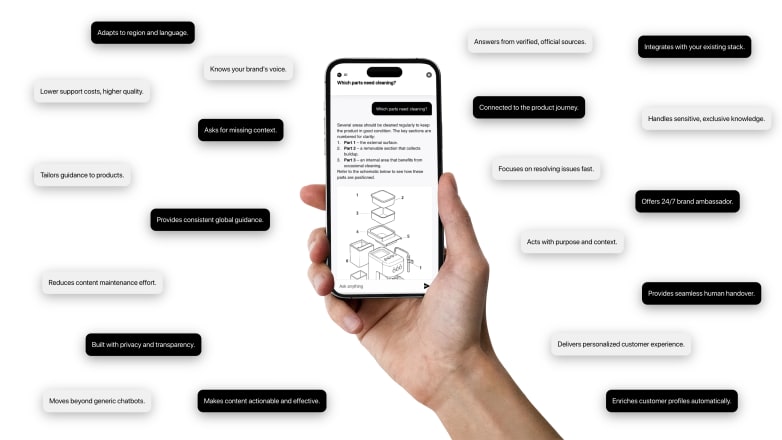
There is a pattern that many leaders will recognise. A new AI assistant is launched as part of the CS tool, often as a side project. It is quick to set up, good in demos and promises to answer almost anything. For a while, everything seem on track.
Now place that same idea in a regulated context. Imagine a firearms brand that wants to help customers understand how to mount and adjust a scope. A customer asks the assistant for help with a specific model. A generic AI, plugged straight into the open internet, pulls in a mix of forum posts and videos and confidently returns instructions that are wrong for that product, or that ignore the brand’s own safety guidance. The customer tries to follow the answer and ends up frustrated, confused or potentially using the product in a way the brand never intended. The source of the problem is simple. The AI gave advice that did not match the brand’s documentation, and it did so in the brand’s name.
Take a very different case in fashion. A luxury brand that has spent decades building a carefully controlled image decides to let a general purpose chatbot handle basic care and sizing questions. The information is roughly correct, but the tone is careless and overly casual. Someone who has just spent a significant amount of money receives a reply that sounds more like a discount retailer than a premium house. The effect is subtle but real. The customer trusts the answer less and trusts the brand a little less as well.
Put together, these situations tell the same story. In the age of AI, customers do not distinguish between “the bot” and “the brand”. The assistant is the brand. One wrong instruction, one careless sentence, can undo a lot of hard work.
At the same time, no serious brand can ignore AI. The pressure to scale support, respond instantly and personalise experiences is only increasing. The real question for executives is not whether to use AI, but how to use it at scale without losing control of message, safety or compliance. This is where Brand Safe AI , working hand in hand with a Customer Data and Experience Platform, shifts the discussion from narrow experiments to long term strategy.
Brand safety by design, not by hope
Many chat projects start from a hopeful assumption. If you plug a powerful model into your channels, write a short prompt about your brand and point it at a few documents, it will behave. That assumption is exactly what creates risk.
Brand Safe AI starts from different assumptions. It is built on the idea that every answer must come from verified, approved information, must be shaped by the specific context of the customer and product, must carry the brand’s voice, and must be transparent about how it uses data. Those are not optional preferences. They are design constraints.
Truth is the first of these constraints. In practice, this means the assistant does not invent. It works from product manuals, service guides, care instructions, warranty terms and policy texts that the brand has already approved. If the content does not say a scope can be mounted in a certain way, the assistant will not claim that it can. If a detail about a textile treatment or appliance feature is missing, the assistant will not improvise around the gap. It will ask for clarification, suggest alternative steps or route the case to a human rather than risk an invented answer.
This approach is only possible because Brand Safe AI is tied directly into the Layerise CDXP. The platform brings together what you know about your customers, your products and your markets. It knows which product a customer has registered, which variant and batch it belongs to, which language and region apply and whether there are active recalls or special conditions. When the assistant responds, it does so with both content context and customer context, rather than as a free floating model.
Protecting the character of the brand
Brand safety is not only about avoiding extreme incidents. It is also about the everyday experience of recognition when customers interact with you. People notice when a reply feels like it comes from the same company that designed the product, wrote the care label and crafted the homepage copy. They also notice when it does not.
In Layerise, the assistant learns from the material you already publish. Product manuals, care guides, support articles, marketing pages and policy texts all carry your vocabulary, your level of formality and the way you speak about quality and safety. Brand Safe AI reads those sources and mirrors that way of writing in its answers.
This has clear effects across categories. A kitchen appliance brand that writes warm and reassuring guidance will see the same warmth echoed when customers ask about cleaning or installation. A luxury fashion house that keeps its copy succinct and elegant will see replies that remain calm and composed, even when dealing with practical topics like sizing or fabric care. A technical electronics manufacturer that invests in precise specifications and clear step by step instructions will see that same precision reflected when customers ask how to use a feature. All of these styles are valid. The important point is that the assistant reflects whichever style the brand has already committed to, instead of drifting into generic chat language.
For companies with strong identities, including textile, outdoor and specialist equipment brands already working with Layerise, this continuity is critical. When someone asks how to wash a jacket or which size is best for a specific use, the answer should feel like a natural extension of the product hangtag, the store display and the web experience. Rather than sounding like a separate system, the assistant reinforces the story the brand has been telling for years.
That continuity also needs to hold across borders. Many consumer brands rely on distributors, retailer staff and service partners in multiple markets. Over time, local variations can introduce differences in how information is explained. With Brand Safe AI connected to the CDXP, customers in different countries receive the same core facts, drawn from the same approved sources, with language and regulatory details adapted where needed but without each region reinventing the message. For groups that operate in sensitive sectors, this is more than a cosmetic concern. It is a way to ensure that guidance about use, care and safety remains aligned everywhere, no matter which reseller, branch site or support channel the customer chooses.
Working within rules and sensitive topics
For regulated industries, AI introduces another layer of concern. It is not enough for responses to be friendly and roughly correct. They must also stay inside the lines drawn by law and by internal policy.
Brand Safe AI addresses this with a close link between regional rules, product configuration and customer profiles. Because the CDXP knows where a customer is located, which specific model they registered and which policies apply to that combination, the assistant can adapt its instructions. A product that is sold in both the European Union and North America may have different safety warnings or usage limits. A generic AI that pulls advice from anywhere may easily mix these up. A brand specific assistant that reads from the right manual for the right region avoids this problem.
Layerise also introduces the idea of Exclusive Knowledge. Some workflows and instructions are too sensitive to show broadly. Typical examples include special procedures during a recall, exceptions to standard warranty rules or internal troubleshooting steps reserved for trained partners. Exclusive Knowledge allows these flows to live in the same system but remain hidden until the right context is present. If a customer with a registered product that is part of a recall contacts the assistant, it can immediately guide them through the required steps. If someone with a different model asks a similar question, the assistant will stay within the public information and not mention the recall at all.
Behind these decisions sit familiar compliance obligations. Privacy regulations demand explicit consent and clarity about how customer data is used. The Layerise platform already records consents, explains purposes and keeps an audit trail of how information was collected and applied. Brand Safe AI extends this discipline into the conversation. When the assistant asks for an email address to send a manual or a serial number to check warranty, it explains why, requests consent and records that event. If a customer wants to see terms, privacy policy wording or warranty conditions, the assistant can display them directly rather than relying on a human agent to remember every detail.
The result is that brand safety, legal compliance and customer trust reinforce each other instead of competing for attention.
From static content to guided resolution
Almost every brand has more content than its customers ever see. Manuals, troubleshooting guides, frequently asked questions, service bulletins and sustainability reports all exist, but most are published as static documents that require a lot of effort to navigate.
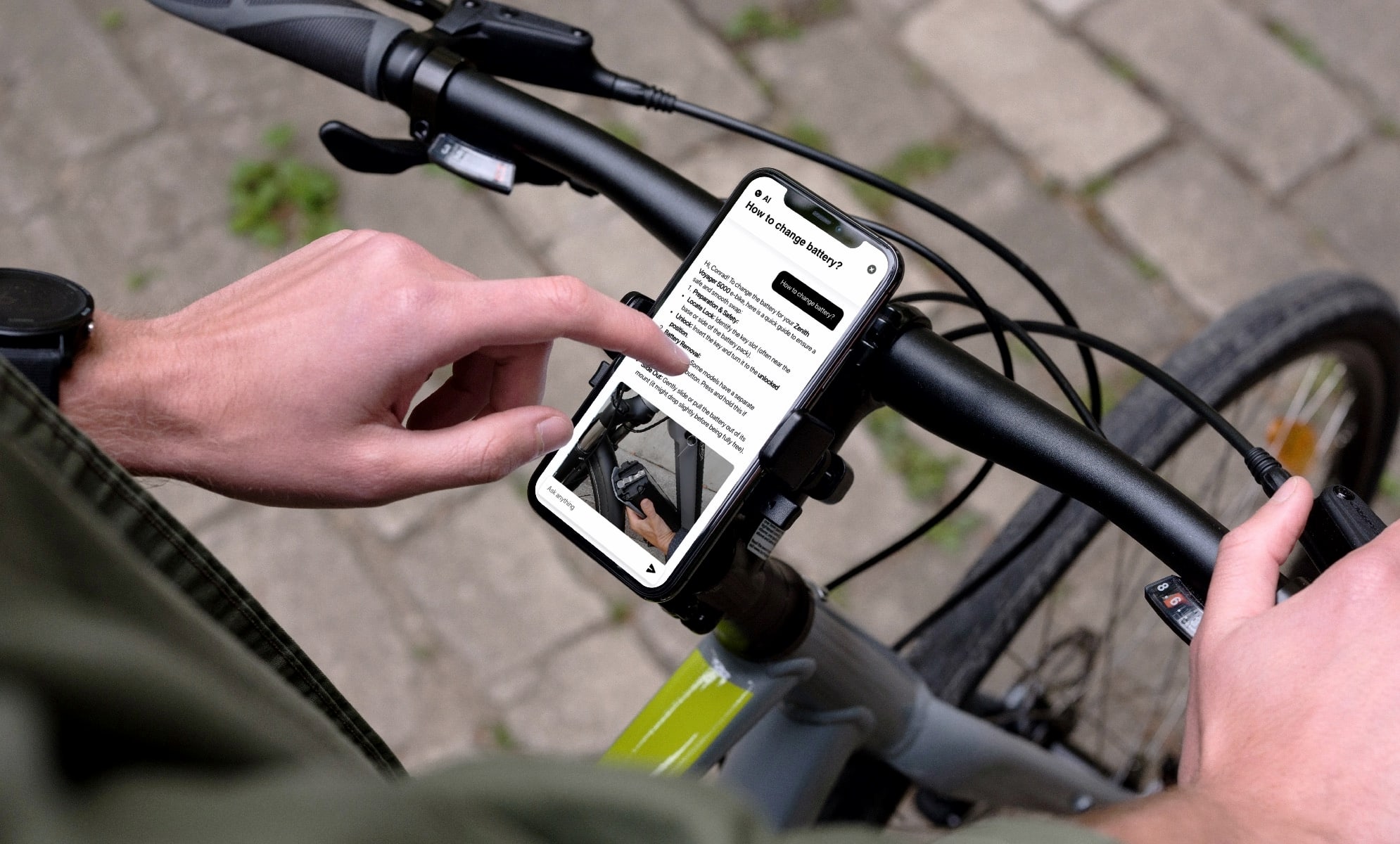
Brand Safe AI turns this static content into guided conversations. When a customer asks why a scope will not hold zero, which setting on an appliance is appropriate for a certain fabric or what a blinking light means on a device, the assistant looks up the relevant product variant in the CDXP and then retrieves the specific step from the official documentation that answers the question. Instead of sending customers to a long manual, it leads them through the one step that matters right now, phrased in a way that fits the brand.

This approach reduces friction for the customer and removes a lot of repetitive work for support teams. Simple issues can be resolved directly in the conversation, while more complex or emotional cases can be passed to human agents. When a handover happens, the agent receives a clear summary of the interaction so far, including which product is involved, what has been tried and which articles or policies have already been shown. That context lets human support start at a higher level instead of repeating basic questions.
The guiding principle is that AI should not just talk, it should help customers reach resolution faster and with less confusion. Truth, context, brand safety, outcomes and privacy all work together to achieve that.
The central role of the CDXP
On its own, a well behaved assistant is valuable. Connected to a Customer Data and Experience Platform, it becomes part of a broader system that continuously improves.
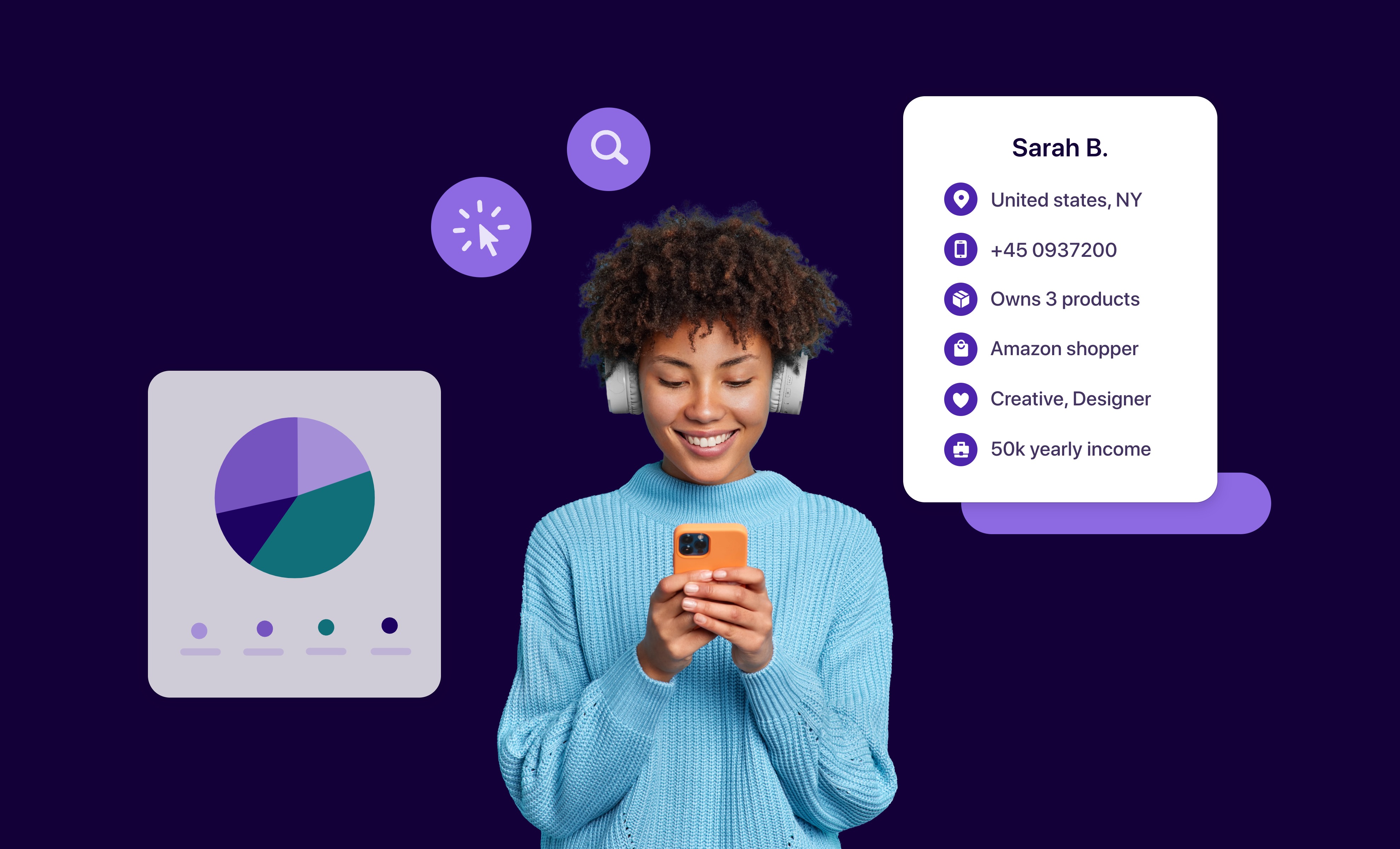
Layerise already unifies product registration, warranty information, customer communications, Digital Product Passport content and behavioural data into one profile. Every interaction with Brand Safe AI enriches that profile. A resolved issue adds information about how a product is used in practice. A consented sign up adds a new communication channel. A clarification request reveals where existing documentation could be clearer.

At the same time, every conversation is traceable. Because responses are grounded in specific sources, teams can see which manual page, article or policy snippet led to a particular answer. If something needs to change, they update the source once and let the assistant inherit the new truth, rather than chasing down scripts across markets.
This combination of depth and control is what turns AI safety from a defensive effort into a reusable asset. Investments in structured content, clear rules and consent flows benefit not only the assistant, but also marketing automation, analytics and product development. The same foundation supports post sale engagement, loyalty programs and regulatory initiatives such as Digital Product Passports.
A practical checklist for leaders
For executives planning their AI roadmap, a few straightforward tests can help separate safe, strategic solutions from risky experiments.
-
Use your own content as the primary knowledge base rather than broad web search.
-
Tie the assistant into a unified customer and product profile so it understands who it is speaking to and which product they own.
-
Encode brand voice and boundaries as concrete settings, not as vague aspirations.
-
Treat recalls, exceptions and sensitive workflows as gated knowledge that appears only when the right context is present.
-
Make consent, privacy information and terms visible inside the conversation, with audit trails that stand up to scrutiny.
-
Measure success by resolution rates, satisfaction, consistency and risk reduction, not just by the number of messages the bot has handled.
These points are already reflected in how Brand Safe AI and the Layerise CDXP are designed. They also serve as a useful checklist for any organisation that wants AI to speak on its behalf.
AI that strengthens your brand
AI is moving quickly into every part of the customer journey. Brands in sectors as diverse as firearms, premium fashion, consumer electronics and outdoor equipment all face the same tension. They need the speed and scale that AI provides, but they cannot afford to take chances with safety, compliance or reputation.
A generic assistant turns that tension into risk. A carefully designed, brand safe assistant connected to a CDXP turns it into advantage. Instead of hoping that a model will behave, you define the sources, context, tone and rules that it must respect. Instead of accepting that some answers will be wrong or off brand, you treat every interaction as part of a controlled system that keeps learning.
Layerise brings together customer data, post sale journeys, Digital Product Passport capabilities and Brand Safe AI in one platform so that enterprises can move with confidence. The goal is not simply to automate replies, but to create customer experiences that are fast, accurate, on brand and auditable.
The brands that will thrive in this new era are not the ones that shout the loudest about AI. They are the ones that quietly ensure every digital conversation reflects the same care they put into their products. Brand Safe AI exists to make that possible.
Learn how to collect valuable insights on your customers to sell even more.
How to Turn a New Obligation into a Growth with Layerise

A trusted, brand-safe AI assistant that knows your products, your customers and your content.